When growth no longer comes from volume
Finding the right entry route into digital label production
Across our markets, established manufacturers built on decades of mass production are shifting toward smaller, higher-value runs. Not by choice — demographic pressure and digitisation have narrowed the pool for their traditional output.
This isn't an isolated story. It's the direction of the market.
Converters see it daily: more versions, shorter runs, faster deliveries, growing SKU complexity, and increasing weight on traceability and compliance.
Most understand the advantages of digital printing well. Still, they hold back. Not because they doubt the technology — but because they're trying to answer a harder question:
When is the right moment to enter digital production?
The challenge isn't digital printing
The challenge is finding the right production route.
The traditional model remains highly effective for large, stable jobs. But it no longer fits every opportunity.
And a successful production route is never about one press alone. It includes printing, finishing, substrates, consumables, workflow, technical support — and, ultimately, business goals.
The right choice depends on the application. On the customer. On the reality of production.
Compliance changes the question
From 12 August 2026, the EU Packaging and Packaging Waste Regulation (PPWR) applies across the European Union — directly covering our Greek, Cypriot, Bulgarian and Dutch markets. It isn't Turkish domestic law, but for Turkish converters exporting to the EU or working with EU-based brand owners, it's becoming just as decisive. Recyclability stops being a conversation between converter and recycling chain — it becomes part of the brand owner's compliance file.
In practice: your customers will increasingly ask for documentation — not reassurance.
For food, beverage, wine and spirits labels, this changes the selection criteria. Dry toner technology is relevant for food-safety applications: it prints on standard paper substrates without a primer, is odourless and low-migration, while preserving fine micro-typography and detail. For converters serving breweries, wineries and the food industry, this isn't a technical footnote. It's a commercial question with a deadline.
A more accessible route
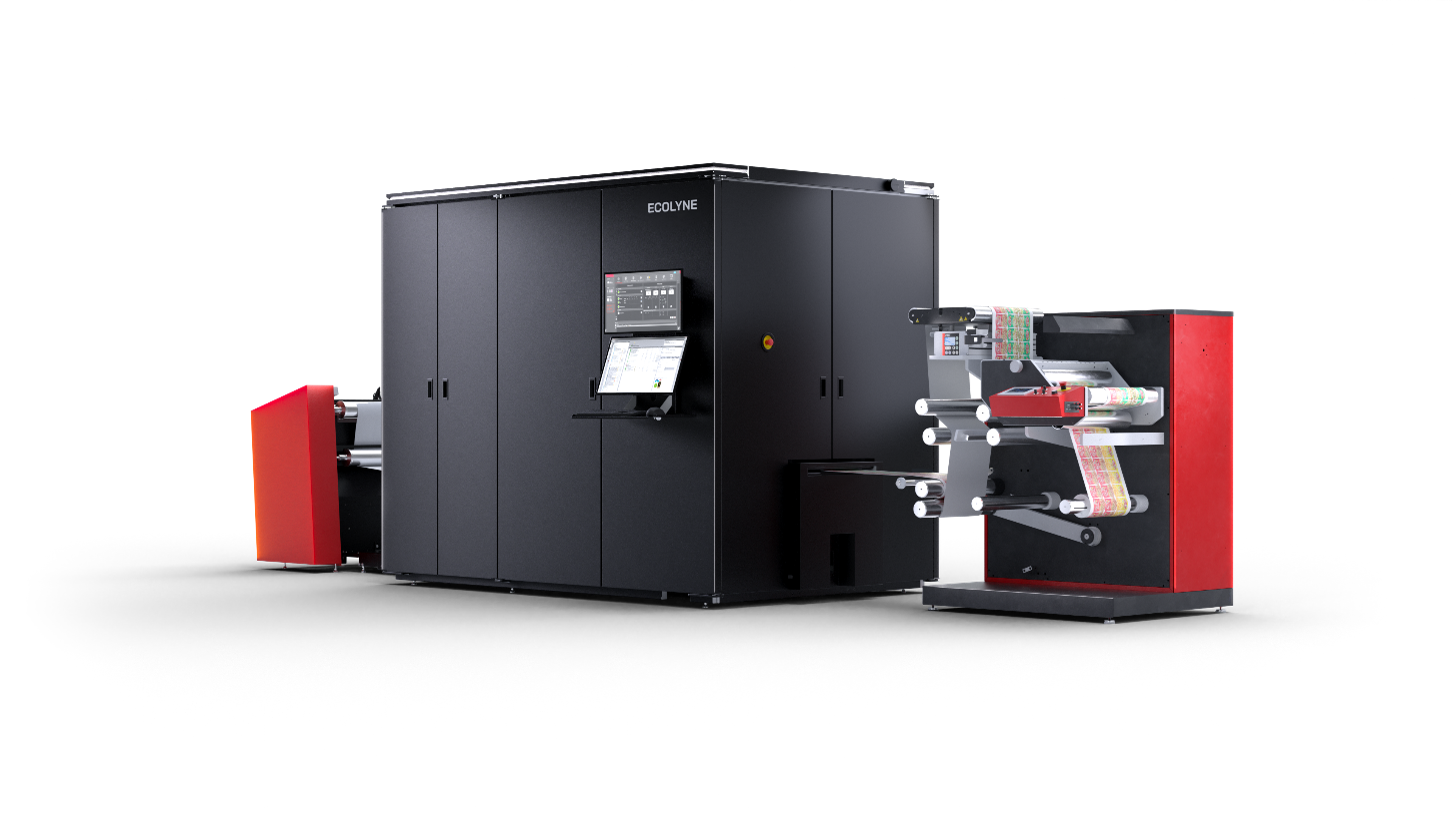
For converters who want to explore digital production without committing immediately to larger, more complex platforms, Ecolyne offers an additional option: an accessible entry route into digital label production.
Five print stations (CMYK + White). 1200 dpi resolution. Dry toner suited to food-safety applications. A wide substrate range — paper, PP, PET, metallised film — without pre-treatment.
Built for organisations looking for shorter runs, more versions, faster turnaround, and greater production flexibility.
The route doesn't end at delivery
A press in a container is not a production route.
At INNVESTIO, our own engineers handle installation and support across Greece, Cyprus, Bulgaria, Turkey and the Netherlands. The same team that designs the route is the one that supports it, from day one onward.
Because the conversation about digital printing is often reduced to technology. In reality, it's about business adaptability: how quickly a converter responds to changing demand; how efficiently new versions are produced; how new applications are evaluated without disrupting existing production.
Beyond the machine
We believe every successful production investment starts with understanding the application and the business goal.
The press is part of the solution. The production route is the solution.
Because every converter's challenge is different. And every route has to be designed accordingly.
We don't offer what we have. We offer what your business model requires.
INNVESTIO — The Industrial Architect
Learn more about XEIKON ECOLYNE →
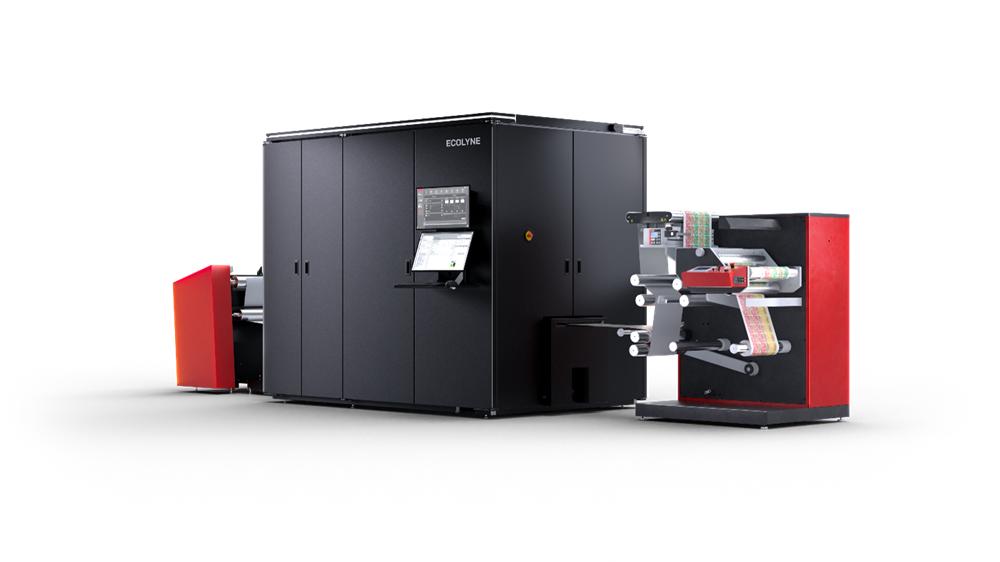
An accessible entry route into digital label production — 5 print stations (CMYK + White), 1200 dpi.

- Address:Tatoiou 153, Metamorfosi, 144 52 , Attica, Greece
- Phone:(+30) 210 220 6100
- E-mail:info_gr@innvestio-group.com